Charlotte’s Third Trip to Zambia
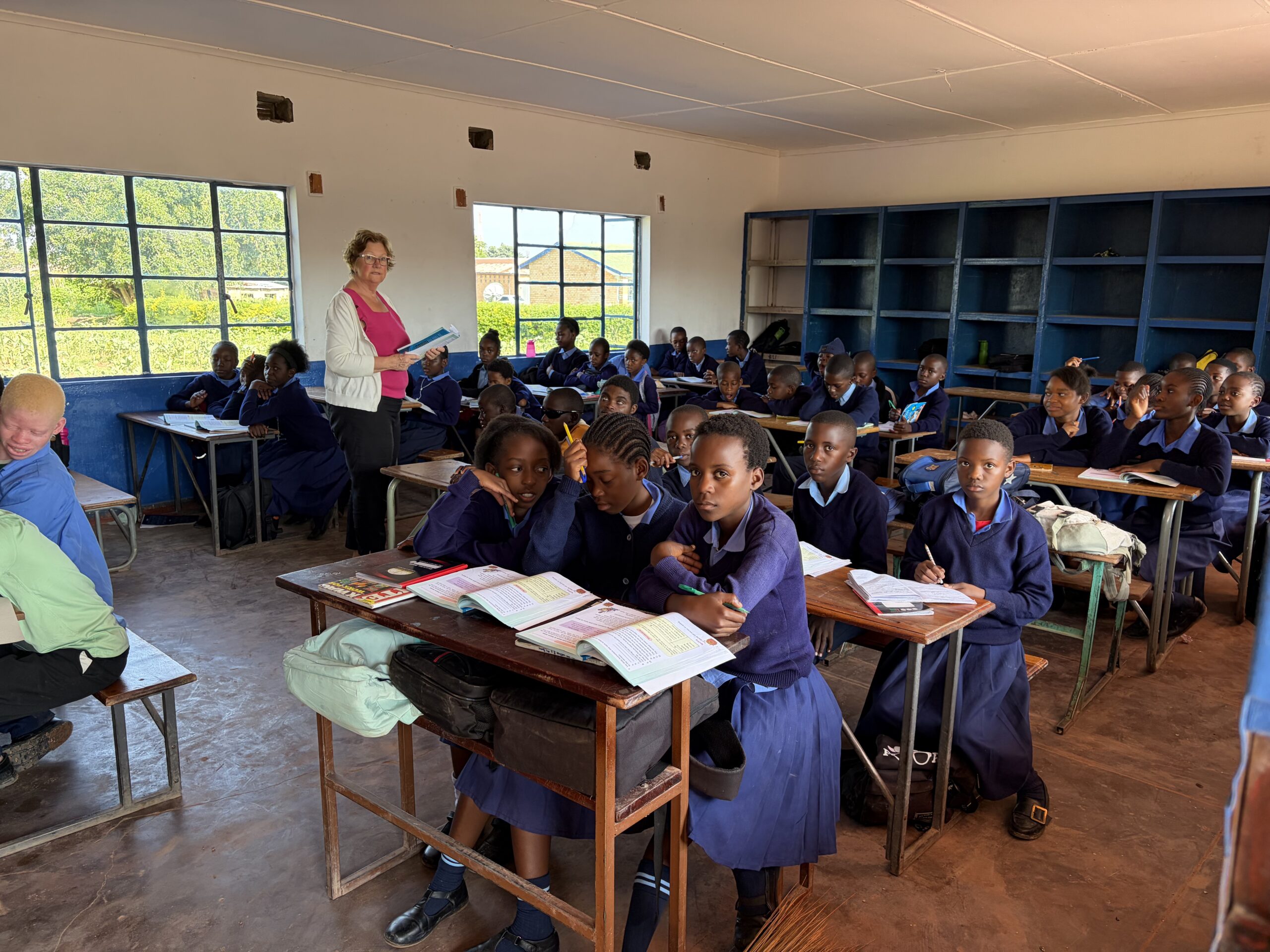
Retired teacher Charlotte Rankin made her third trip to Zambia in February and March of 2026. Drawing on her many years of teaching experience, Charlotte spent much of her time working with students at St Odilia and St Mary’s schools. At St Odilia, Charlotte taught Grade 6 English grammar to approximately 43 students. With such a large class of students with varying abilities and visual capacities; in a classroom designed for about half that number, getting the lesson to everyone was quite a challenge. Three to five students shared each seat, even though the benches were intended for a maximum of two. Despite the cramped conditions, the students listened attentively and carefully copied their notes. Among them were blind and very visually impaired students who took their notes on braille slates using a stylus. Charlotte was amazed at the speed with which they could write. Their main accommodation in the classroom was to sit closer to the teacher so they could hear clearly without the surrounding classroom noise drowning out her voice. Without visual cues, being able to hear the teacher is especially important. With virtually no teaching aids available other than a well-worn blackboard, the most practical method of teaching in a classroom like this is the lecture method. This style of teaching has its roots in the British colonial education system and continues to be widely used.
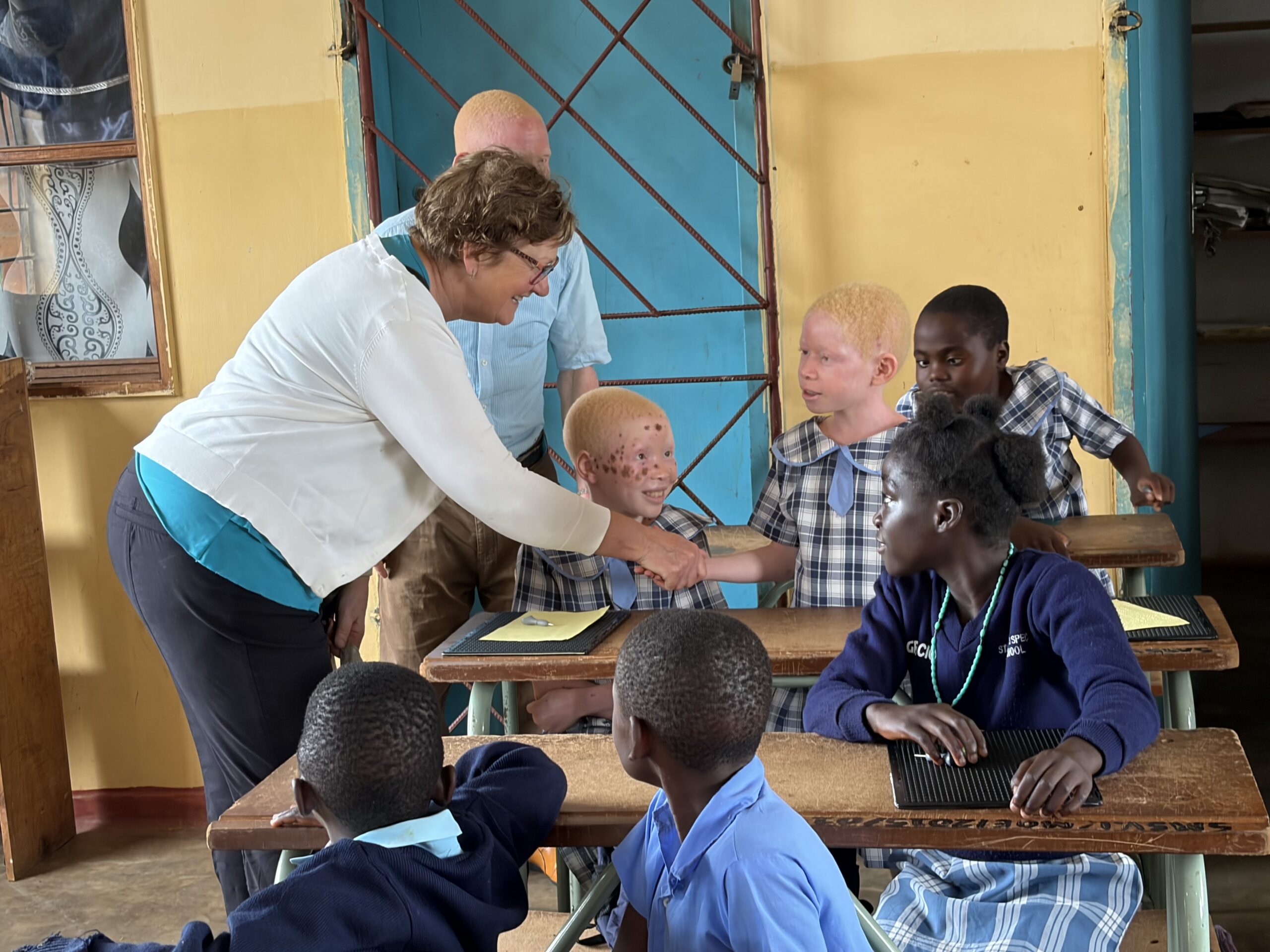
At St Mary’s, Charlotte worked with Mr. Chisimbe, a blind teacher who taught a Grade 7 class of approximately 12 students. Most of the students were blind or had very limited vision. Charlotte’s role was to read literary texts to the students and then engage them in discussion about what they had heard. Braille copies of the texts were scarce, so the students listened carefully and responded to the discussion. Charlotte assumed that Mr. Chisimbe had another goal in mind as well. He wanted his students to become familiar with different English accents, including the accents of their Canadian visitors. Charlotte was impressed by how in tune he was with his students. Although he could not see them, he could recognize each student by their voice.
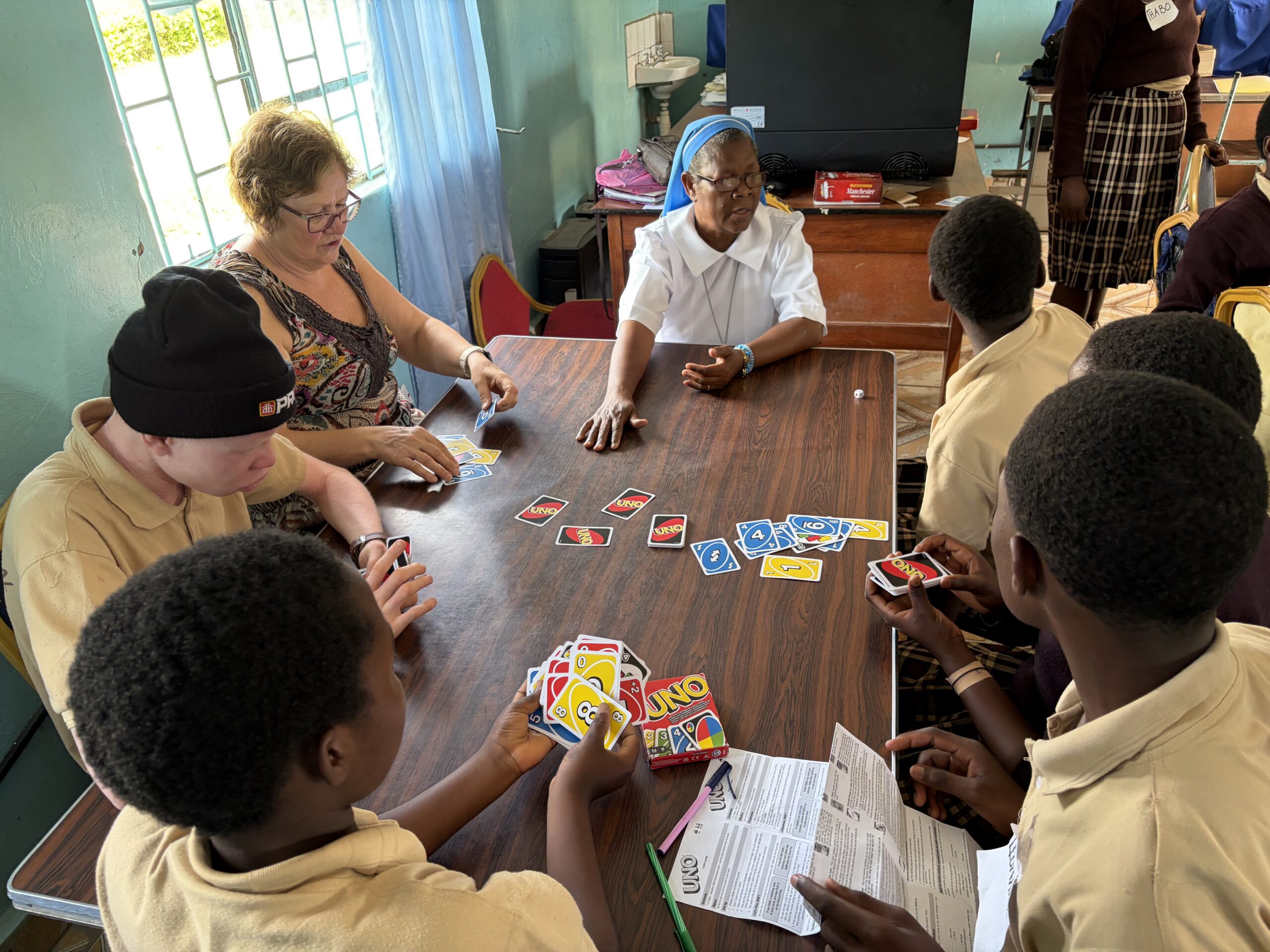
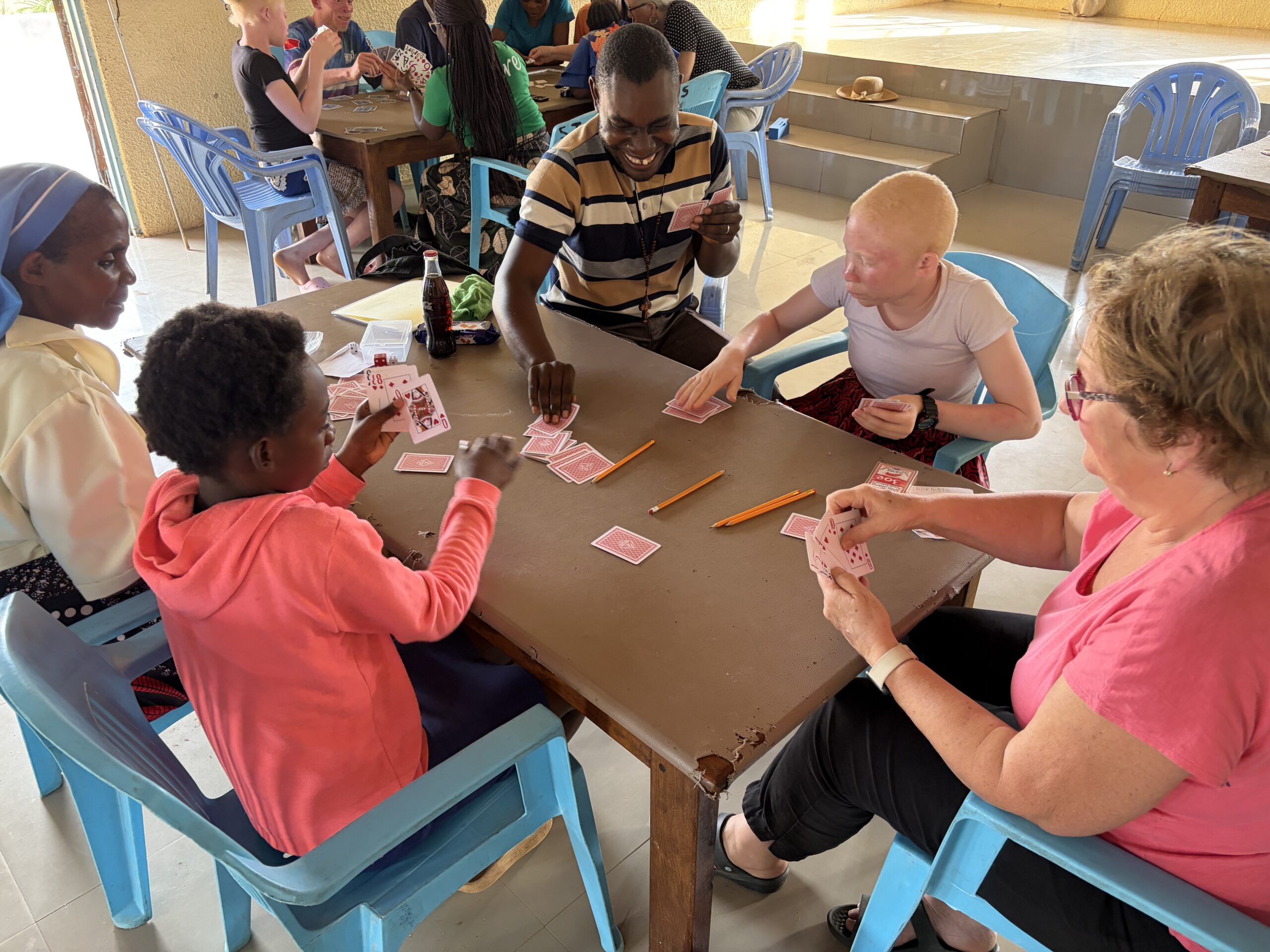
Charlotte also spent time working with student mentors who were teaching their peers how to play the games introduced by the Canadian visitors. This was one of the most enjoyable parts of her visit. The informal setting gave her an opportunity to interact with both the students and staff in a relaxed and fun way. She noticed that the Canadian volunteers were most needed at the beginning, when the games were introduced and explained. After that, the student mentors took over and taught their classmates almost entirely on their own. The maturity, confidence and sense of responsibility shown by these young mentors was remarkable. Charlotte felt their wisdom and leadership were far beyond what one might expect from students their age.
Like many of the Inverness County Cares volunteers, Charlotte was also given many items to take to the schools. As a member of the Monday Crafters at the Story Teller’s Gallery in Judique, she was delighted to bring 43 beautifully made children’s dresses. The younger girls were absolutely thrilled with their new dresses. The Hope Chest in Mabou, along with other generous donors, also provided a large collection of books for students who have some sight. These gifts, both practical and thoughtful, added another dimension to the visit and brought plenty of smiles.
A particularly special part of Charlotte’s trip was the opportunity to visit with her sponsored child, Charity Katai. Spending time together allowed Charlotte to get to know her better and made an already meaningful visit even more memorable. Charlotte returned home with many stories and a deeper appreciation for the students and teachers she had met. Her third trip to Zambia once again showed how much can be accomplished through sharing skills, encouragement and a willingness to learn from one another.
Inverness County Cares (ICC) is a local charitable organization, founded in 2012 and based in Inverness County, NS, Canada. ICC works in partnership with Chalice.ca, a Canadian charity, based in Bedford, Nova Scotia. Chalice provides guidance and assistance to help ICC provide a better life for the children at the Kawambwa schools. The Kawambwa Project involves supporting two schools for albino and visually impaired students, in Northern Zambia. Inverness County Cares always welcomes new members. Individuals who wish to donate, can use the donate button on our website https://invernesscountycares.com When using E-transfer, please include your mailing address for CRA tax receipts and a thank you message. E-transfer address: invernesscountycares@gmail.com or send a cheque to Inverness County Cares, 5414 Route 19, Judique, NS, Canada, B0E1P0. Taxation receipts provided.
Garlic time! Inverness County Cares has harvested more that 1,000 cloves of organic garlic. It is presently hanging to cure and will be ready for sale in a few weeks.
Call/text 902 227 5425 to order. This delicious organic garlic is a fundraiser for the Kawambwa schools in Zambia.