Partners in Development

Author: Inverness County Cares Page 2 of 32

The Universal Language of Pizza

 By Winnie Rankin

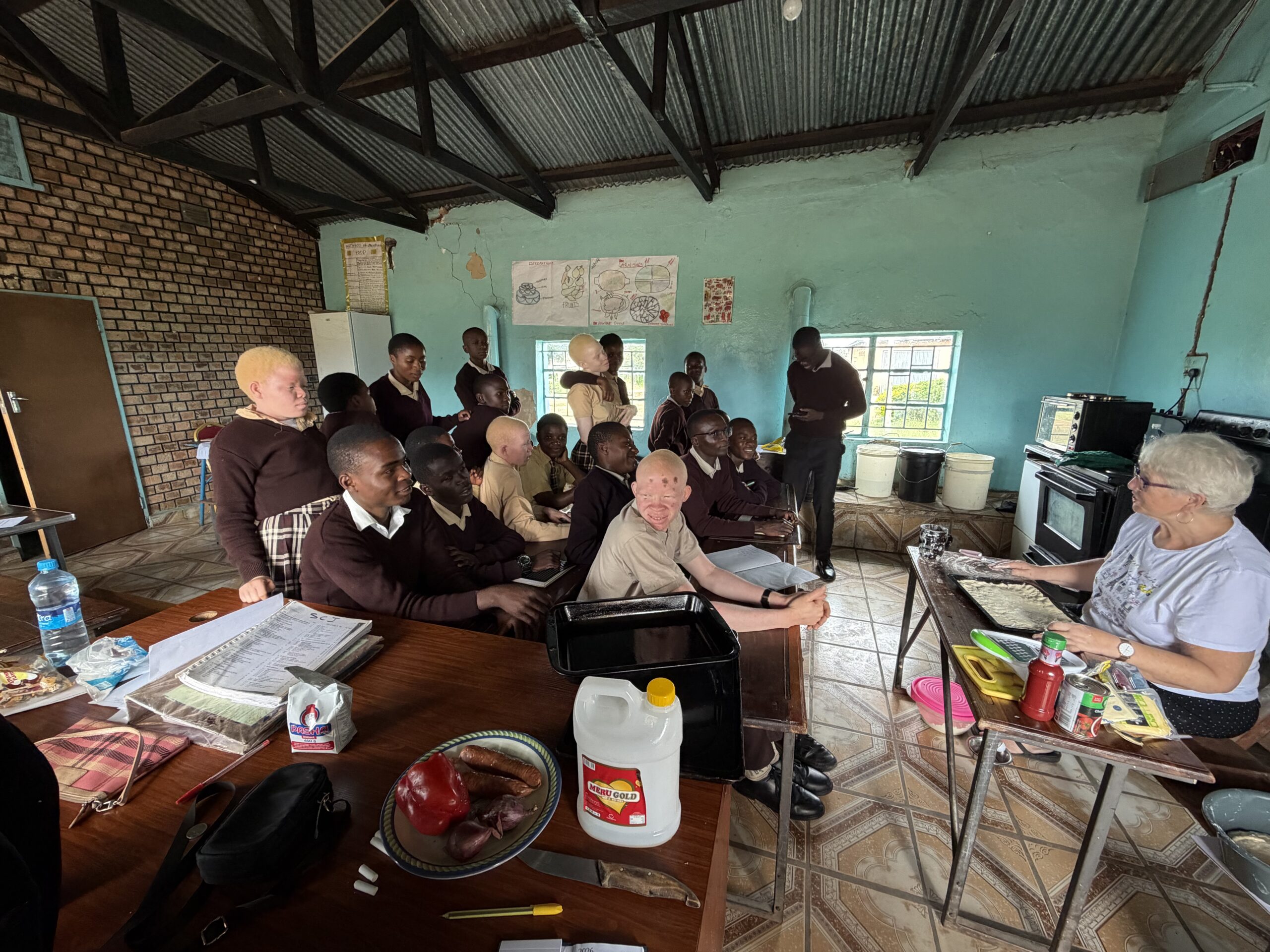
What surprises me most about the children in Zambia is not how different their lives are from ours in Canada, but how similar they are. When I first travelled there in 2024, one of the very first things the students asked me was if I would make pizza.

They had never actually eaten it before, but they heard about it on the internet through shared phones or the occasional computer. I bet they first saw it in music videos, since that is what they watch the most.

I quickly tried to explain the massive hurdles we would face. Many of them do not have an oven at home because they lack electricity. Luckily, we did have an oven at the school. The real problem was sourcing the ingredients.

Zambia does not really have a dairy industry, though they do raise some cattle for meat. Without traditional refrigeration to store cream or milk, no one ever got into the habit of using them. Today, those who have fridges and want milk use long life milk that does not require keeping it cold. That is what we used at the convents where we stayed.

Unlike other hot countries where people preserved cheese by drying it or storing it in caves, the practice never took hold in Zambia. They did not make butter either. Everyone uses margarine made with vegetable oil. There is even a brand of margarine called Butter, which was super confusing for us at first! We would ask for butter and local residents would kindly pass us a container of margarine. We quickly learned that there was no real butter in the villages.

Eventually, we discovered that real butter was available in the larger cities at a supermarket called Shop Rite. Local people do not shop there, but the sisters would buy things there to feed us, including jams, instant coffee, and processed cheese slices. We found real butter there, imported from Botswana or Zimbabwe. I looked for mozzarella cheese back in 2024 but came up empty.

This time, after more requests for pizza from the kids and even the sisters, I searched the shelves at Shop Rite again and finally found it!  I only bought two packages and quickly realized I should have bought more. I also found pureed canned tomatoes, which was the closest thing to pizza sauce available. I bought another bottle labeled tomato sauce that turned out to be ketchup! I did mix some of that in with the canned tomatoes, along with spices I brought from home like oregano, thyme, and garlic powder.

People do not usually make bread since they have no ovens, but the kids at the schools are getting used to commercial sliced bread and really like it.

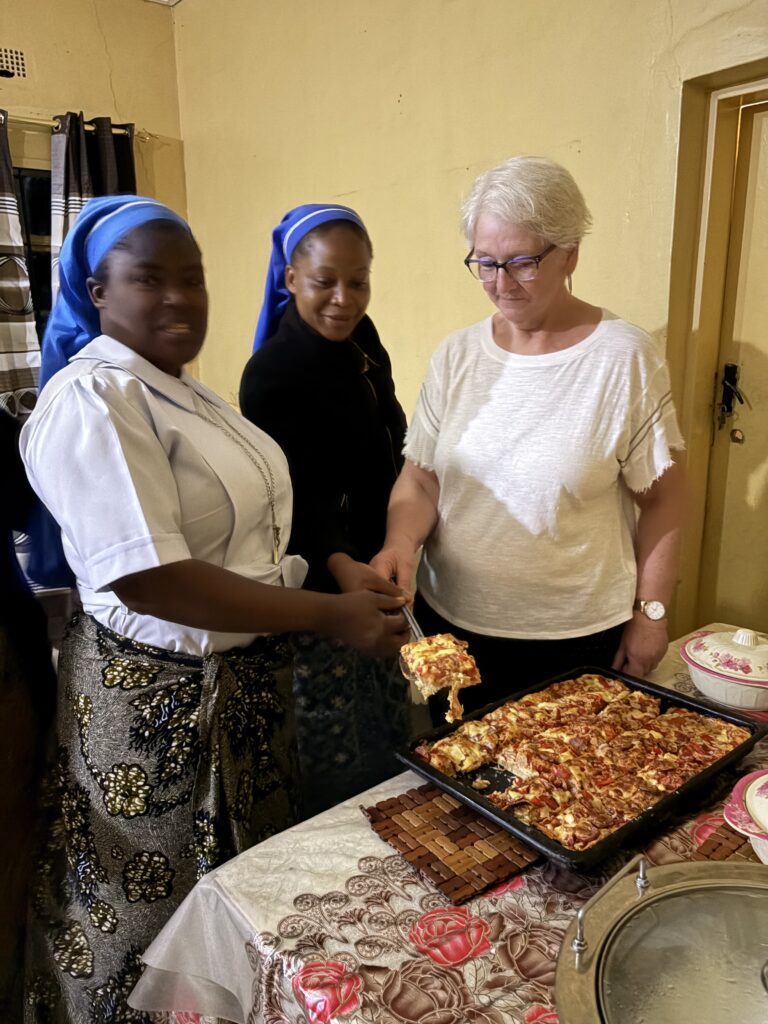
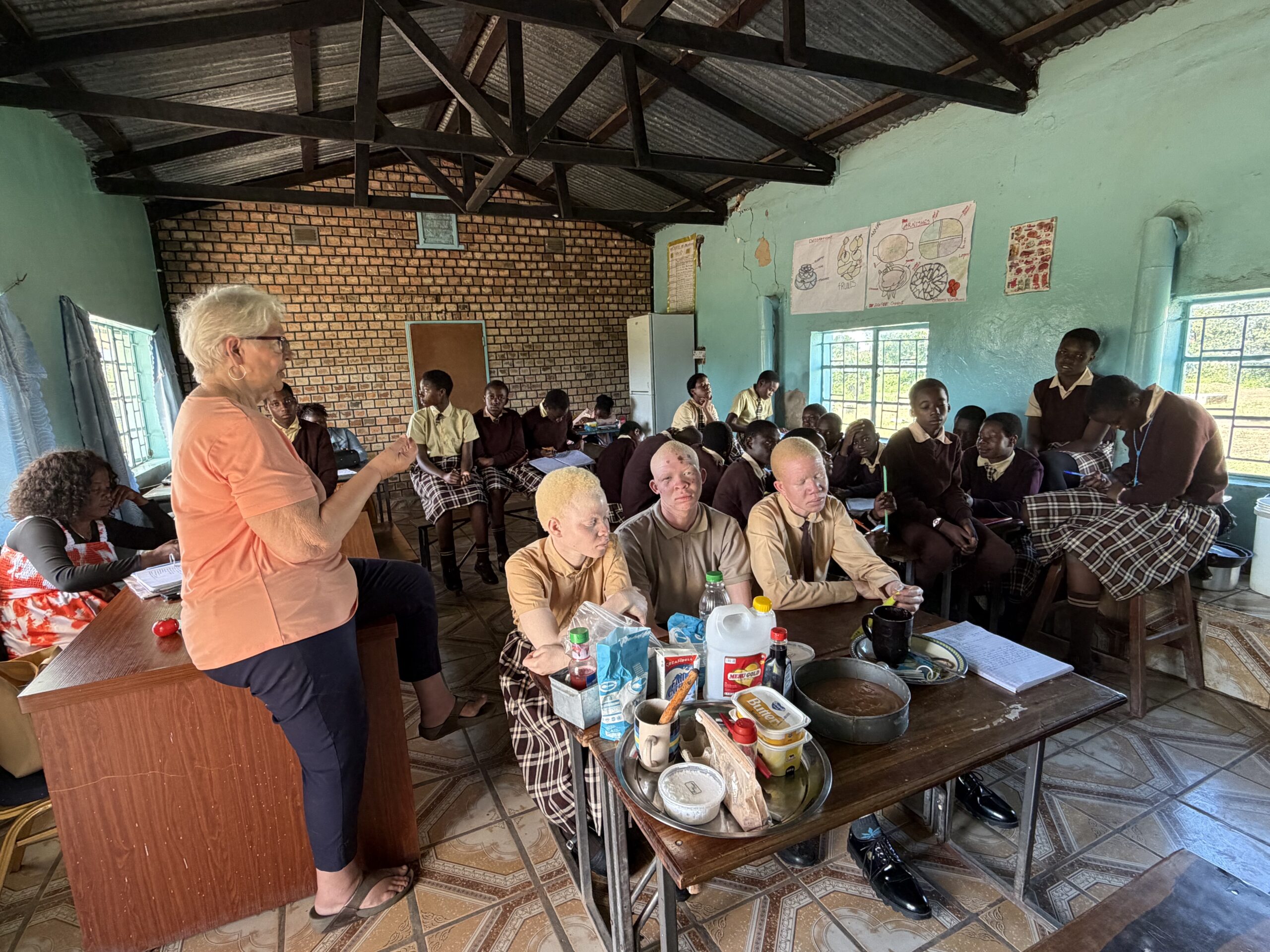
We had no pizza pans but found some others that worked, though they were a bit dark on the bottom. We made the crust, told the students the story of how yeast works, and showed them how to cut vegetables like onions, green peppers, and fresh tomatoes. Then we grated the cheese. I mixed the sauce, put it on the two crusts, and showed them how to sprinkle the toppings evenly.

We were finally ready for the oven! Then, disaster struck. The school oven did not work. I had to take the pizzas over to the convent and use their oven instead, but only one pan would fit at a time. I cooked one and sent it over while putting the other in. I rushed back to the school to find the kids waiting for me, they had not even started eating yet! I quickly cut it up and passed it out on small pieces of paper, then rushed back to take out the other one.

To be honest, the pizzas were not great. They did not have enough cheese or vegetables, and their local flour made the crust harder than usual. But the students were absolutely thrilled! There were even kids outside the door hoping for a taste of this exotic food. They licked their fingers and enjoyed every single bite.

I heard later that some went to the Assistant Head Mistress’s office just to brag that they had made and eaten pizza. They were just like children everywhere else in the world, wanting to do and have what all their peers have. I ended what felt like a very frustrating day with a product I was not thrilled with, but they were so incredibly happy that I let the rest go.

They also requested chocolate cake. This time I had the butter, the milk from the convent, and the cocoa I brought from home. The cocoa did the trick with a bit of vinegar to sour the milk. Again, they were very happy with the results, even if it was not perfect. They just wanted to taste chocolate cake since the traditional cake there is a white pound cake.

I found that I learned more about their food, their culture, and why they ate the way they did than I could have ever imagined. It was so much better than going on a typical tourist trip where you just look in from the outside. This was truly looking from the inside.

icczambia.blogspot.com  Check out our blog documenting Inverness County Cares’ trip to Zambia.

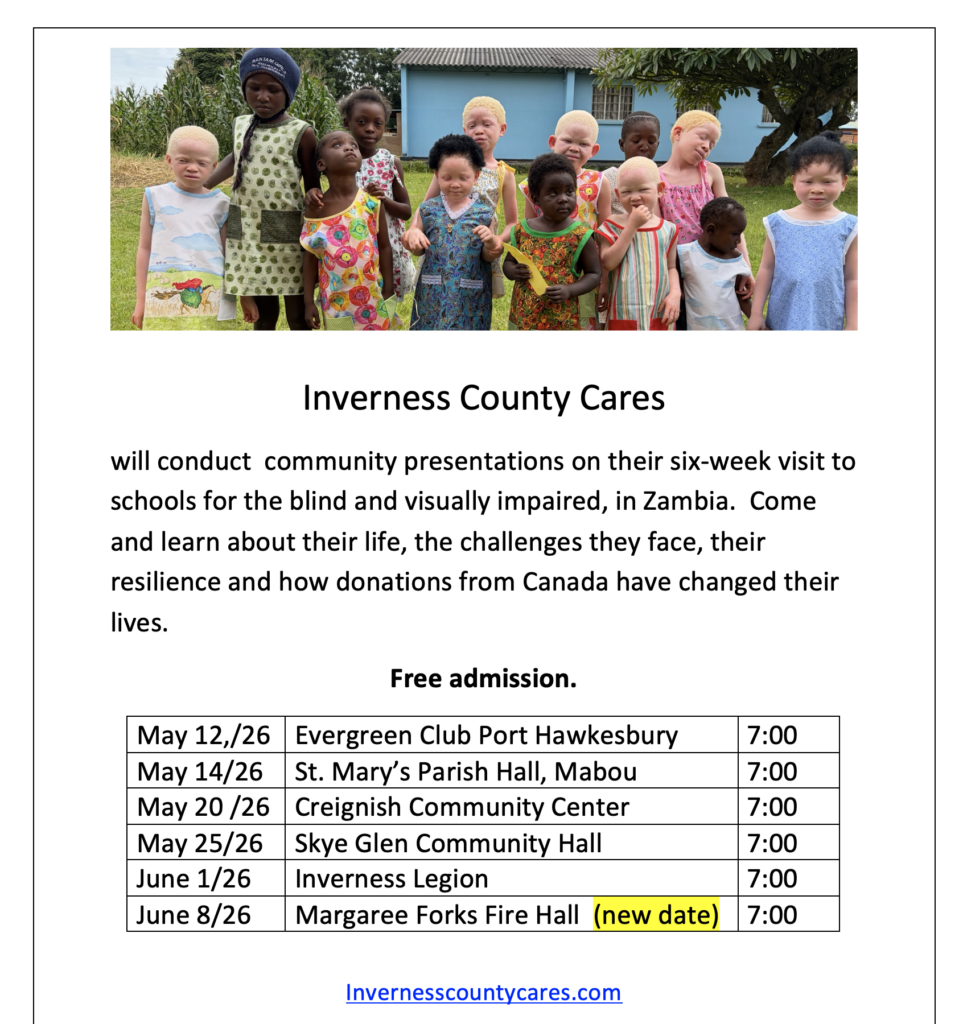
Inverness County Cares will conduct community presentations on their six-week visit to schools for the blind and visually impaired, in Zambia. Come and learn about their life, the challenges they face, their resilience and how donations from Canada have changed their lives. Free admission.  

Tuesday April 28/26

St. Peter’s Parish Hall Port Hood

7:00

Wednesday May 6/26

Judique Community Center

7:00

Change of date, TBA

Margaree Forks Fire Hall

TBA

Thursday, May 14/26

St. Mary’s Parish Hall, Mabou

7:00

Wednesday, May 20 /26

Creignish Community Center

7:00

Monday, May 25/26

Skye Glen Community Hall

7:00

Monday, June 1/26

Inverness Legion

7:00

Inverness County Cares (ICC) is a local charitable organization supporting two schools for albino and visually impaired students, in Zambia. If using E-transfer, please include your mailing address for CRA tax receipts and a thank you message.   E-transfer address:  invernesscountycares@gmail.com or send a cheque to Inverness County Cares, 5414 Route 19, Judique, NS, Canada, B0E1P0. Taxation receipts provided.
 

Community Presentations

Inverness County Cares will conduct  community presentations on their six-week visit to schools for the blind and visually impaired, in Zambia.  Come and learn about their life, the challenges they face, their resilience and how donations from Canada have changed their lives.

Free admission.

Messengers of Hope: Inverness County Cares Returns from Zambia

Six weary but joyful travellers from Inverness County Cares (ICC) have returned home after a transformative journey to Zambia. Traveling as ambassadors for our local members, the people of Inverness County, and Canada, the team was welcomed with open arms and sincere gratitude for the gifts and support sent from home.

The team included John Gillies, John MacInnis, Winnie Rankin, Charlotte Rankin, Colleen MacLeod, and the legendary Betty Jane Cameron. At 87, Betty Jane remains a pillar of ICC. Her unique talents in music, nursing, and midwifery added a deeply personal touch to the time spent with students, staff, and villagers. Having visited three times over the last six years, she has been a firsthand witness to the incredible progress made at St. Mary’s and St. Odilia schools thanks to Canadian generosity.

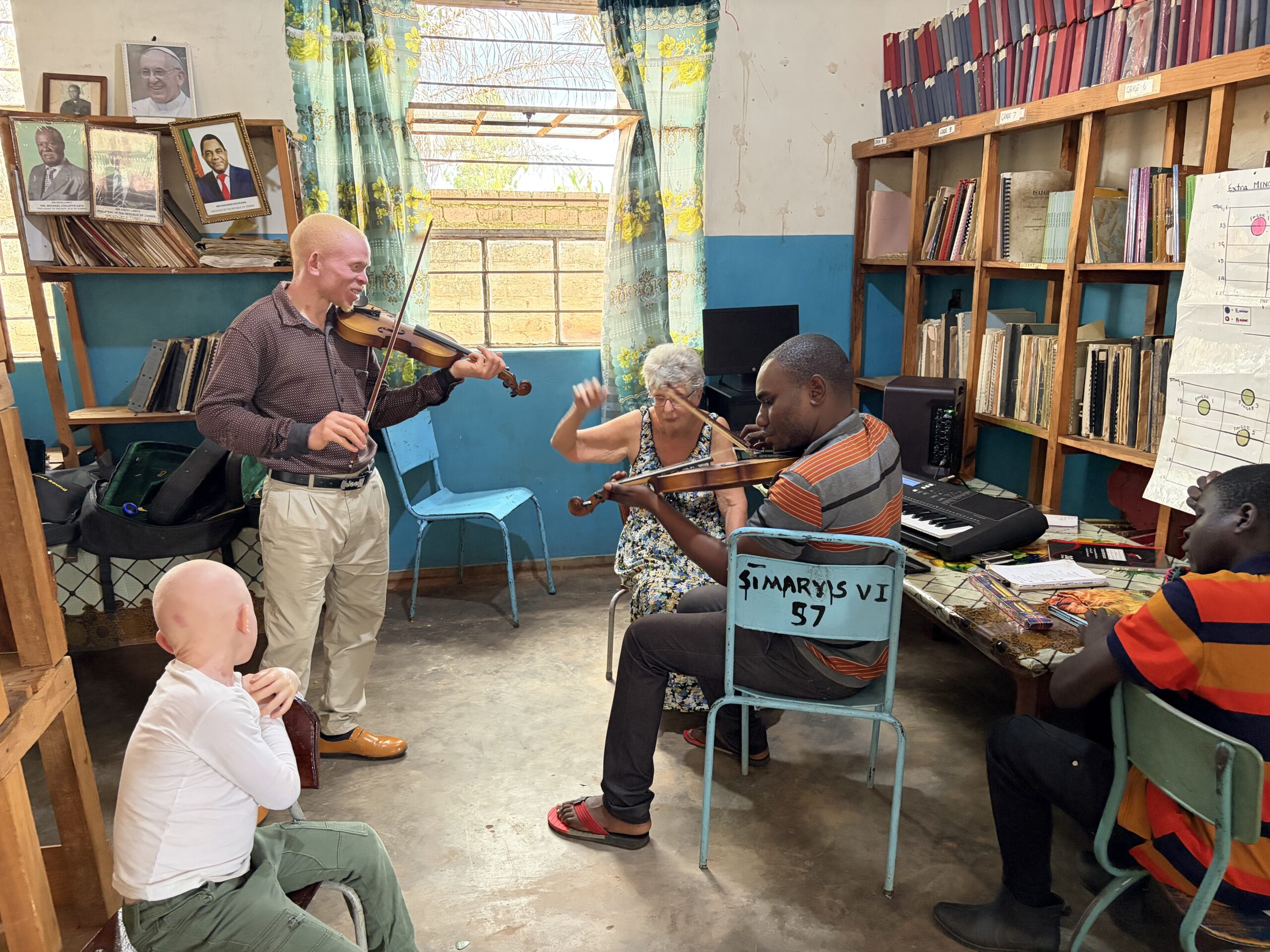
Music is the heartbeat of these schools. The students have a deep hunger to create, and this year, the ICC team was greeted by a full brass band, a thrilling sign of how much the program has flourished. Beyond the brass, the schools now boast electric guitars, amps, and microphones, giving the students a modern “rock” sound.

Betty Jane’s small music room was a constant hub of activity. She mentored local teachers and coached students on the guitar, flute, and violin. The progress in just two years was remarkable.

Students with visual impairments often showed a unique gift for the flute and violin. Without the need for visual markers, they relied on sound and vibration to find their placement. Betty Jane noted that one of her biggest thrills was watching the “surprise and delight” on a student’s face when they found that perfect, correct note.

Students like Blessing, who is totally blind, sing with professional-level skill. For her and many others at the margins of society, including those with albinism or physical disabilities—music provides a vital sense of purpose and confidence.

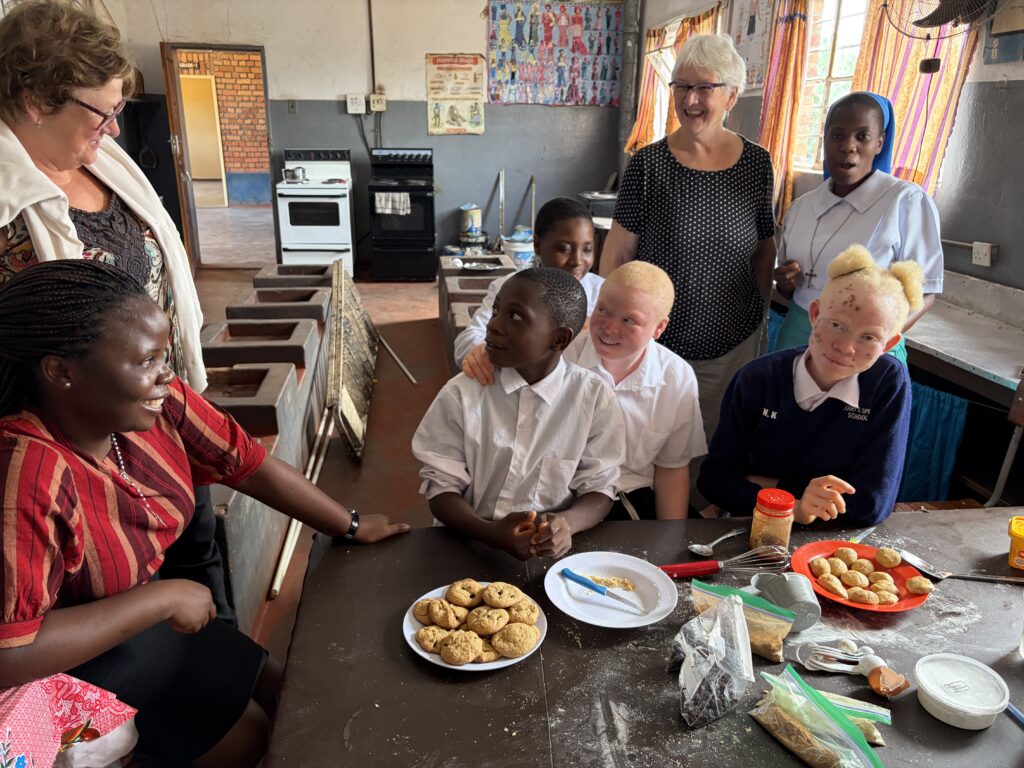
Betty Jane noted that the music often happened naturally. “I was never able to count the students,” she said, “as everyone came when they could.” By the time she left, many had mastered local songs and universal favorites like “Hot Cross Buns”—a song that became a favorite after Winnie Rankin baked real ones for the children to taste!

The team also focused on practical wellness. Betty Jane led First Aid courses at each school using training manikins and reference books donated by the Red Cross, Hesperian Health Guides, and local Inverness County Fire Departments.

The sessions were full of engagement and laughter, especially the surprised looks when the manikin’s chest rose during practice! Students and staff were fascinated to learn that even a school tie could be used as a sturdy sling in an emergency.

A local nurse named Maureen helped conduct the training in the native Bemba language for over 20 participants, including teachers, groundskeepers, and house-parents. Together, they established fully stocked first-aid kits that are now safely stored and accessible to the whole school community.

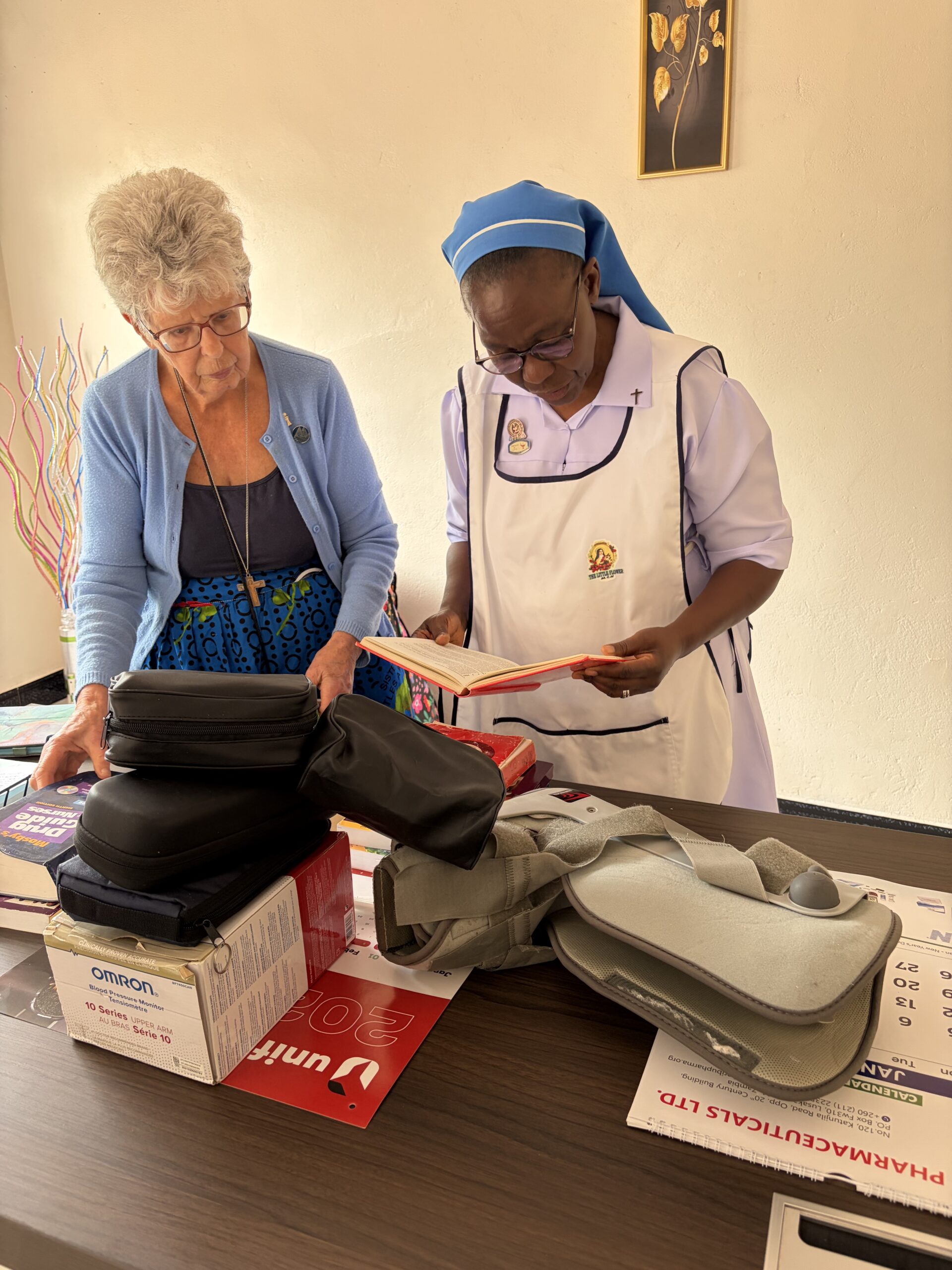
The team also delivered a large supply of bandages, medications, and blood pressure machines. These were shared between the school convents and Sister Margaret Mary at the newly opened Little Flower Clinic , a facility dedicated to caring for vulnerable mothers and children.

The standard of living at these schools is visibly improving, a testament to the power of partnership. Our partner, Chalice, provides the essential foundation by sponsoring most of the children and covering their basic needs. Inverness County Cares then “puts the icing on the cake,” providing the specialized instruments, medical equipment, and training that help these students truly thrive.

This journey proved once again that music, health, and kindness are universal languages that can bridge the distance between Inverness County and Zambia.

Inverness County Cares will be conducting community presentations to talk about their adventures and highlight the incredible support Canadians have given to Zambia. When a schedule is created it will be posted on our webpage and blog.

icczambia.blogspot.com

invernesscountycares.com

Inverness County Cares (ICC) is a local charitable organization, founded in 2012 and based in Inverness County, NS, Canada. ICC works in partnership with Chalice.ca, a Canadian charity, based in Bedford, Nova Scotia. Chalice provides guidance and assistance to help ICC provide a better life for the children at the Kawambwa schools. The Kawambwa Project involves supporting two schools for albino and visually impaired students, in Northern Zambia. Inverness County Cares always welcomes new members. Individuals who wish to donate, can use the donate button on our website   https://invernesscountycares.com When using E-transfer, please include your mailing address for CRA tax receipts and a thank you message.   E-transfer address:  invernesscountycares@gmail.com or send a cheque to Inverness County Cares, 5414 Route 19, Judique, NS, Canada, B0E1P0. Taxation receipts provided.


Arrived in Zambia

We (Inverness County Cares) are in Zambia!

Despite a snowstorm which delayed our original departure by a day and mechanical difficulties delaying our flight to Addis Abba, we reached Zambia although on a different time schedule than anticipated. We spent two days in Kisisi near Lusaka, to get our feet under us. While there we met with old friends from out last stay, the Little Servant Sisters of Mary Immaculate. They have an amazing complex where the they manage the many aspects of their operation. Orchards, vegetables, farm animals, bakery, nursing home, school, retreat centre and convent are just part of their domain.

We arrived in Mansa on Saturday and were met by Sr Marjory, Newman and Louis our driver. The drive back to Kawambwa was lengthy because the road conditions were not the best, especially during the rainy season.

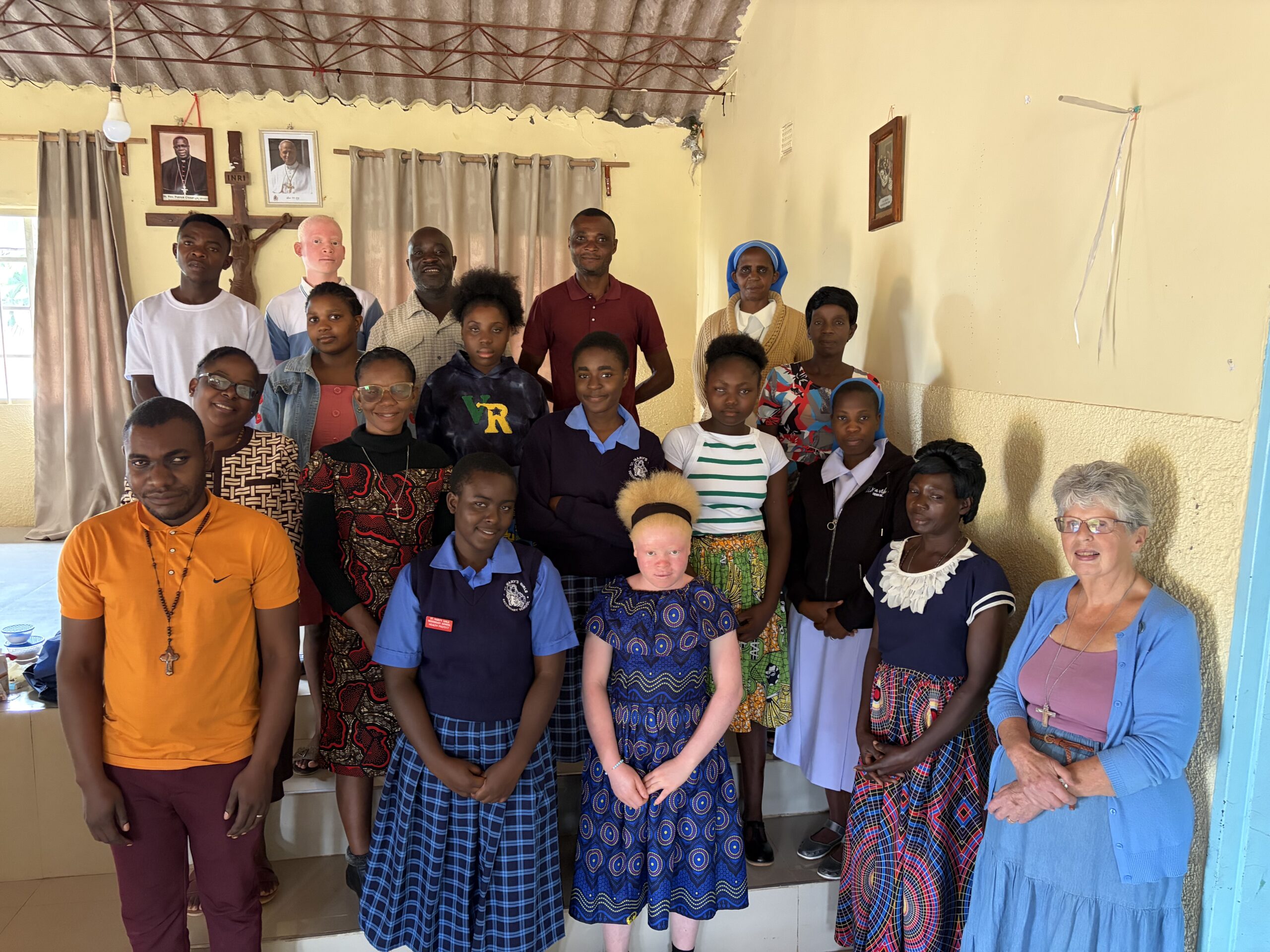
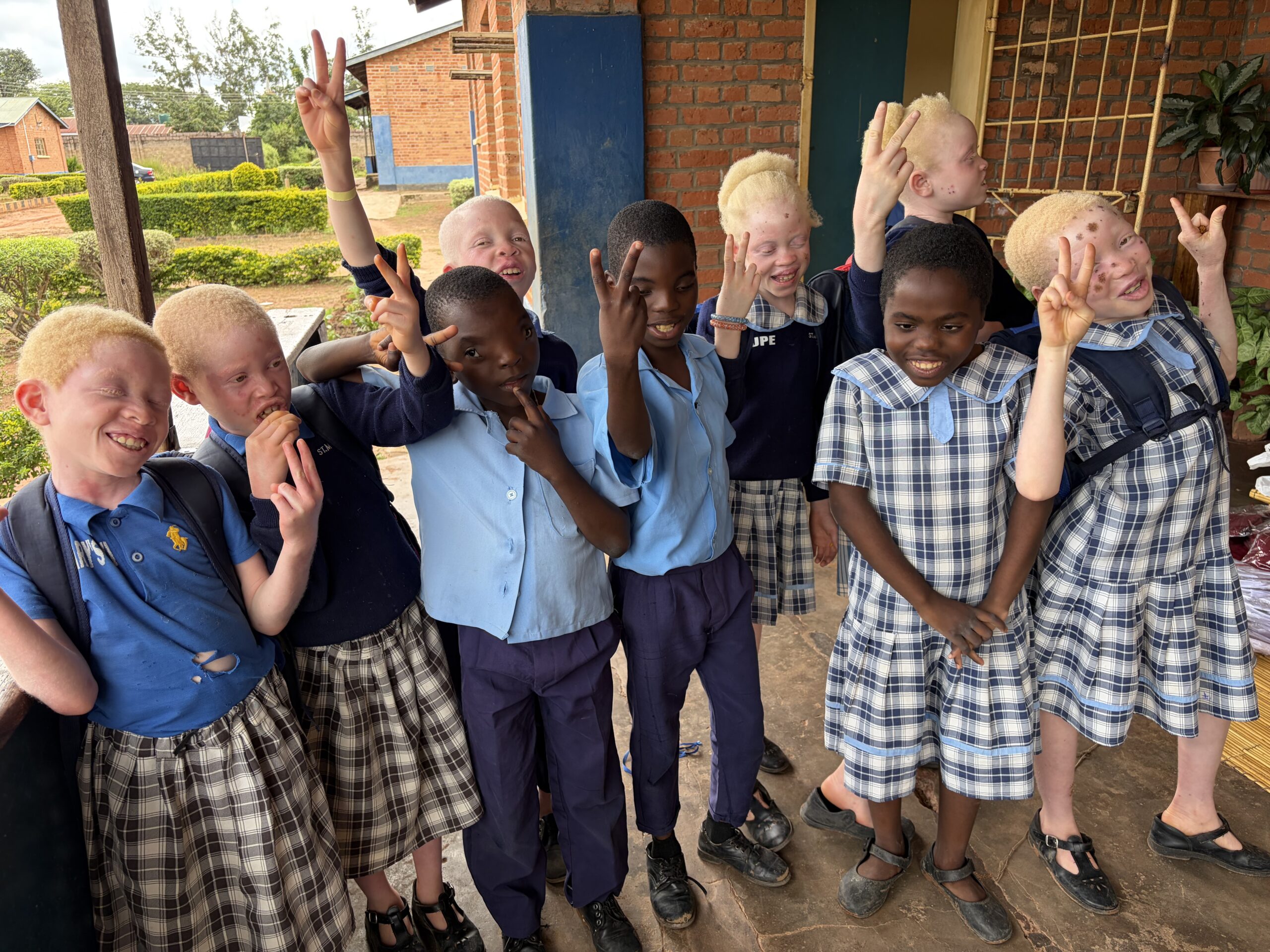
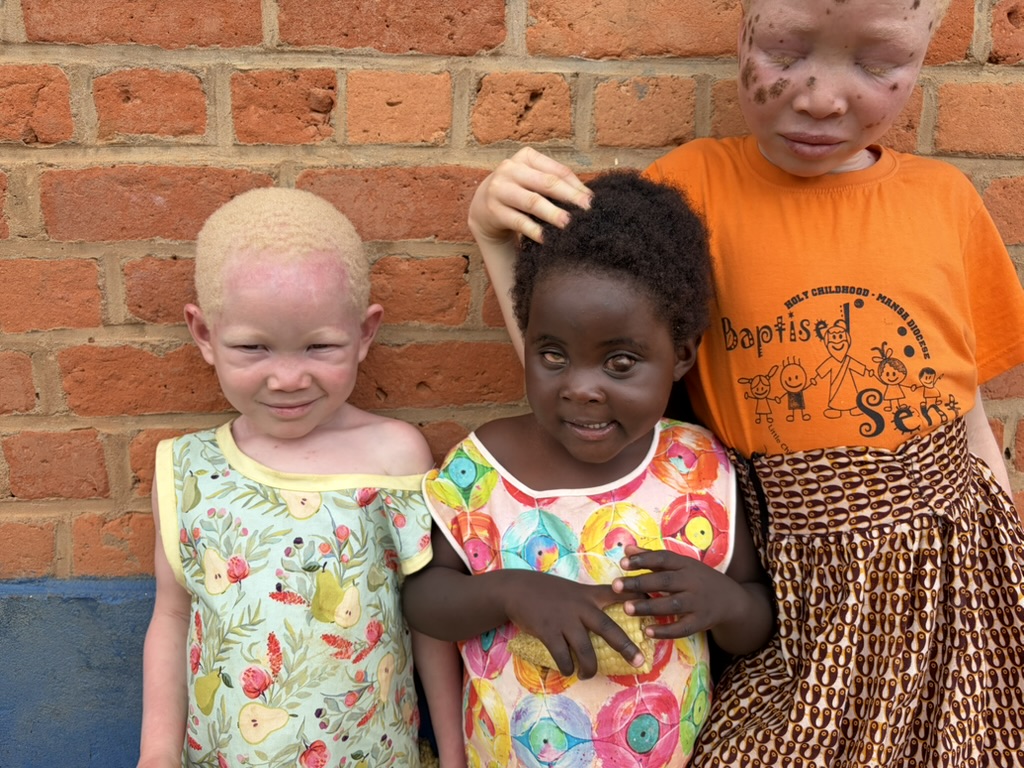
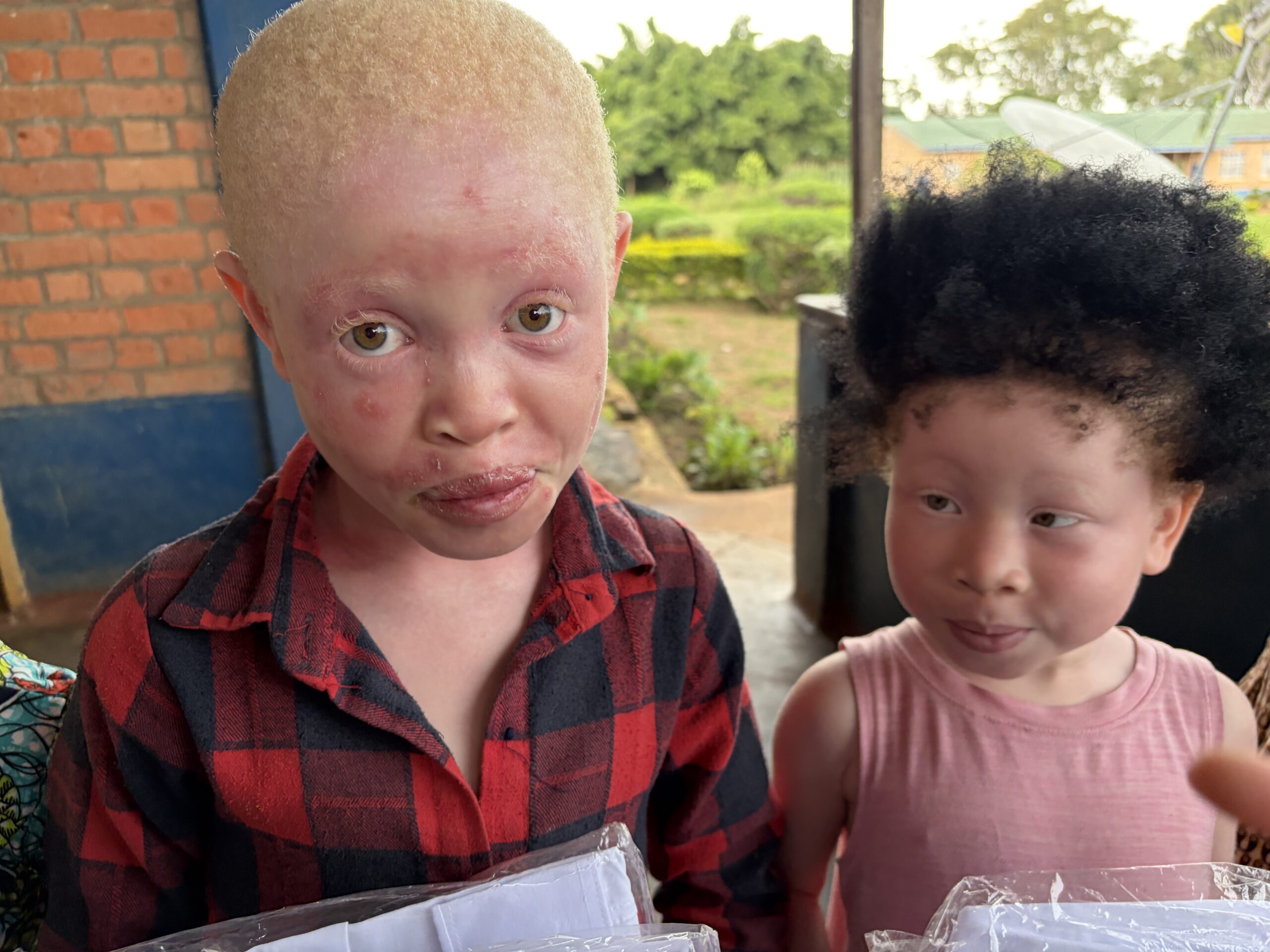
We were welcomed enthusiastically by the Sisters of the Child Jesus in Kawambwa. We all stayed at the convent and took our meals with the sisters. The school has about 115 students all with some type of visual impairment. They range from totally blind to various eye afflictions which limit their sight and children with albinism. We were able to provide the school with significant upgrades to the school infrastructure and a new well.                                                                                                                                                                                                                                                                                              We interacted with the children on an ongoing basis and gained an appreciation of the challenges they face in a school that needs some of the most basic teaching supports.

We all contributed in our respective skill areas, education, food services, health care, music and the trades. We worked with, well drillers, plumbers, electricians, painters, glazers, and carpenters to provide infrastructure repairs. We encountered lots of good trades people who got the jobs done but with minimum tools to work with!

On Saturday February 21st we travelled from Kawambwa to Mporokoso.  We stopped at the Little Flower Maternity Clinic, the Tetekela Orphanage and the Mother House of the Sisters of the Child Jesus. We also met with Leroy, the president of the Kasama Rotary Club where we discussed a possible partnership with the Rotary Club on student’s eye care.

The St Odilia School in Mporokoso equally captured our hearts as did the St Mary’s children and sisters. The sisters of the Child Jesus administer both schools and manage a vast complex of schools, health centres, farms and residences. The schools have a very good reputation, despite their scarcity of what we consider essential teaching aids and curriculum supports. The students, teachers and sisters at both schools are remarkable. They have built schools with a very good reputation catering to children with special visual needs.

The students at both schools have so much potential, with many serious students with inquiring minds, thirsty for knowledge and a seeking a path to building their country into a global success story. Zambia is steadily shaping a new economic narrative, one driven not only by its vast natural resources, but increasingly by its young, educated population. With over half of its citizens under the age of 25, the country’s emerging economy is closely tied to the ambitions, innovation, and resilience of its students.

The St Odilia and St Mary’s Schools are providing the best education possible. Students are serious and appreciate the opportunity to reach for their goals and despite less-than-ideal classroom conditions, they are succeeding. Graduated alumni feature many successful career paths.

The partnership of Chalice and Inverness County Cares (ICC) has changed the whole landscape of the schools and given the students many advantages which were not possible before this cooperative endeavour began. The people of Inverness County, Nova Scotia and Canada have opened their hearts and supported the schools in many ways.

The gratitude shown for your assistance is beyond description. We hear of it every day, from the sisters who now have solar power to keep the schools running when the many power interruptions occur. From albino students who now have sunscreen, hats and sun glasses to protect them.  From students who now have some reprieve from the sweltering heat radiating from the metal roofs in their classrooms. From the sisters who now have reliable transportation.

From both school bodies who feel safe because of the wall fence which protects them from danger. From sisters and students who have clean running water. The list goes on, with many more instances of your generosity.

Thank you for sponsoring children through Chalice, donating to Chalice and ICC, supporting ICC by giving us your refundable bottles and cans. Our supporters are the people making this happen, ICC is the messenger.      Follow us at     icczambia.blogspot.com.

Inverness County Cares (ICC) is a local charitable organization, founded in 2012 and based in Inverness County, NS, Canada. ICC works in partnership with Chalice.ca, a Canadian charity, based in Bedford, Nova Scotia. Chalice provides guidance and assistance to help ICC provide a better life for the children at the Kawambwa schools. The Kawambwa Project involves supporting two schools for albino and visually impaired students, in Northern Zambia. Inverness County Cares always welcomes new members. Individuals who wish to donate, can use the donate button on our website   https://invernesscountycares.com When using E-transfer, please include your mailing address for CRA tax receipts and a thank you message.   E-transfer address:  invernesscountycares@gmail.com or send a cheque to Inverness County Cares, 5414 Route 19, Judique, NS, Canada, B0E1P0. Taxation receipts provided.
Page 2 of 32

Powered by WordPress & Theme by Anders Norén